
I was barely a week into this last month of the year, and had been to two networking meetings where the speakers dove straight into the usual topics:
“What are your 2026 goals?”
“Have you done your 2026 planning yet?”
You know the drill. Goals. Intentions. Plans. Different words, same conversation.
For most of my life, I was right there with them, a “professional” goal setter. Quarterly goals, monthly goals, weekly goals… I had them all. They kept me structured, motivated, and often too wound tight around outcome and completion.
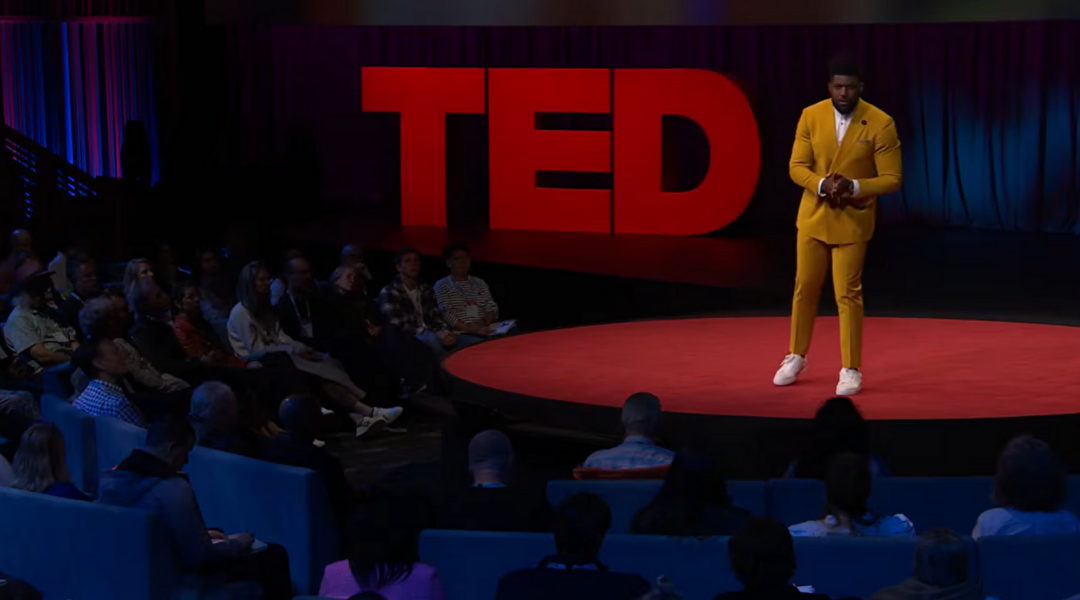
Then, one evening, while scrolling through TED Talks to find something to watch, a title caught my attention and I nearly flipped off the couch:
“Why you should stop setting goals (yes, really)” — Emmanuel Acho
Stop setting goals? I think I actually gasped out loud when he opened the talk by saying, “The surest way to fail at life is to set a goal.” Who was this guy and what could he possibly be thinking?
So I clicked. And I watched. All of it. And instead of shaking it off, the message dug in deep and wouldn’t let go.
If you’re not familiar with Emmanuel Acho (I wasn’t), he’s a former NFL linebacker whose career was cut short by injury, forcing him to confront the sudden loss of a lifelong dream. He lived firsthand what it feels like to have a clearly defined goal, etting drafted into the NFL in the first three rounds, and miss it through circumstances entirely beyond his control. From there, he rebuilt his sporting career in a different way, eventually becoming an author and a respected media spokesperson, carrying with him the perspective that influenced his TED talk.
This is important to know, because Acho doesn’t just challenge the idea of goals for the sake of being provocative, he exposes how they can box us in. A goal, by design, draws a finish line. It demands an end. It encourages us to aim for one specific outcome. The minute you hit the goal, it’s over. And if you don’t hit it? You’re left with a sense of failure, regardless of how much you may have accomplished along the way.
Life, as we all know, isn’t linear. It doesn’t follow a schedule or a checklist. It often surprises us. It sometimes opens doors we didn’t know existed, and when we connect our self-worth and success to narrow, rigid goals, we risk missing what’s possible.
Acho proposes something different: objectives, not goals; direction, not deadlines; possibility, not endpoints.
When we align our ambitions as open-ended objectives, like “become more creative”, “show up with curiosity,” or “learn something new,” we stop limiting ourselves. We stop punishing ourselves for not hitting a target. Instead, we give ourselves space to evolve, adapt, and even change.
Don’t get me wrong: I still have defined fiscal targets and a driven ambition. But I’ve loosened the grip on most of them. Some matter. Many don’t. And I’m okay with that.
So as we near the New Year, here’s what I’m asking: instead of “What goals will you set for 2026?” try asking yourself…
What direction do I go in?
Who am I becoming?
What journey am I committing to this year?
If you haven’t watched Acho’s TED Talk I strongly encourage you to. And if you do, I’d love to hear what hits you. Head over to LinkedIn and share your thoughts in the comments of my corresponding post.
Here’s to entering 2026 with fewer finish lines and more open roads.